
"We're always outnumbered..."
News and Views Concerning Working-Class Politics: December 19, 2025
A steelworker leader wins big in Kentucky. The many paths to a banking collapse. Rail unions oppose a major rail merger. Why you should oppose a major media merger. How to win in the rust belt. And, can Josh Shapiro beat Kamala Harris?
Below you’ll find a range of news and views that concern working-class politics. Many are written by research associates and friends of the Center for Working-Class Politics.
Louisville Union Leader Keeps Kentucky Senate Seat Democratic after Special Election
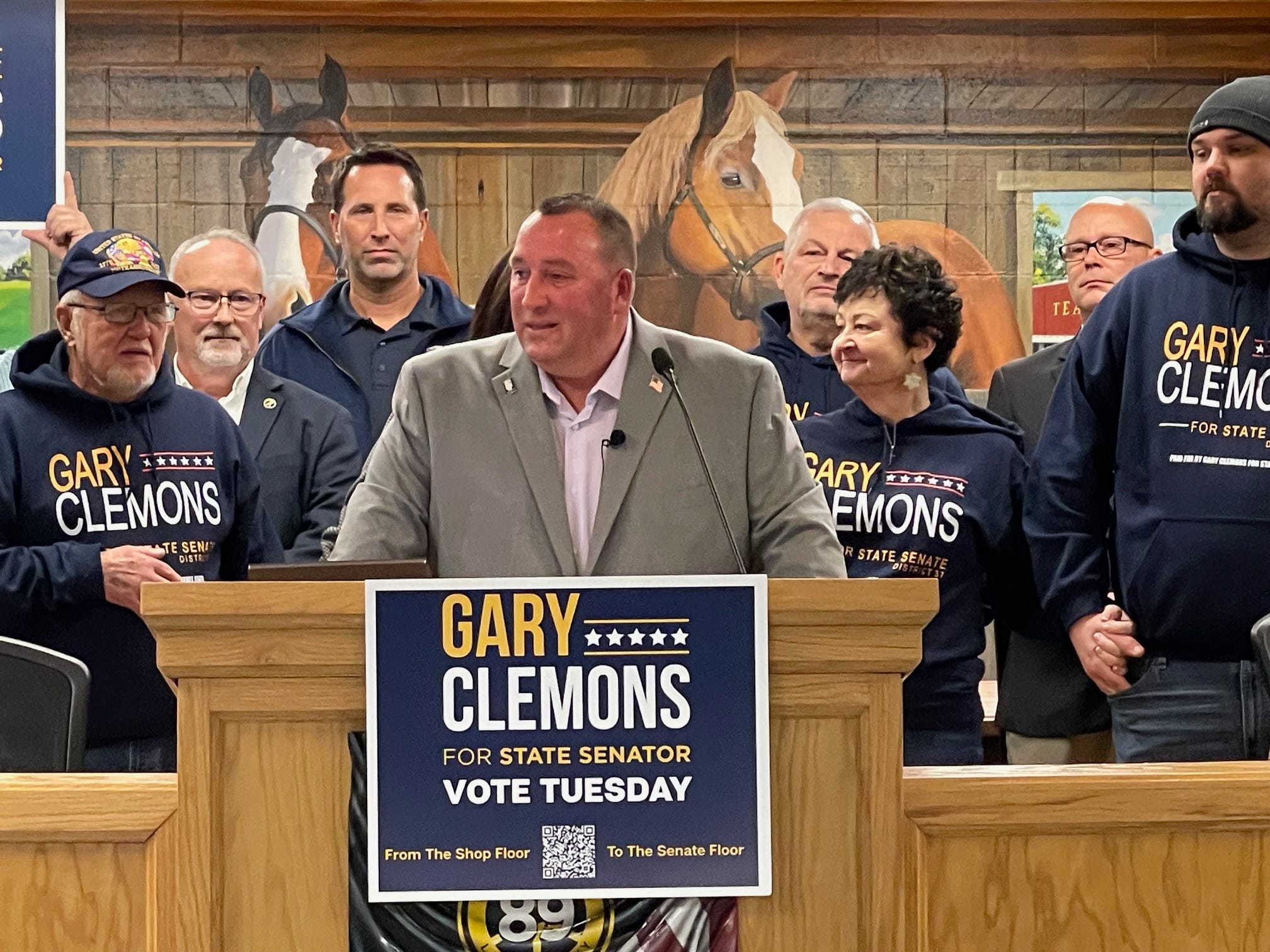
Gary Clemons, president of United Steelworkers Local 1693, won his special election for state senate with 72% of the vote. That’s a big improvement over Kamala Harris’s +6 point performance in the same district:
“Tonight, the people of Senate District 37 sent a clear message: they want a fighter in Frankfort who will stand up for working families, not corporate interests and greed,” Clemons said in a statement. “I’m honored by the trust voters have placed in me, and I’m ready to go fight for jobs, childcare, healthcare, and all the things Kentucky’s working families need. For far too long Wall Street greed has crushed working families in Frankfort. This is just the beginning of reclaiming our state for regular working people.”
His ‘shop floor to senate floor’ campaign was a great example of the way labor candidates can combine a pro-worker policy agenda with a visceral appeal to working-class life. About a week before the election, he gave some choice quotes to a local paper:
“My background is labor. My background is blue collar. Clocking in and clocking out, steel toe boots,” Clemons said […] “Everything is rising except for wages,” […] “We have to figure out a way to lower the prices. Job structure, infrastructure, bringing business to the south end.”
When asked about joining a Democratic super minority in Frankfort, Clemons drew on his union experience.
“Well that’s also where my background comes from, when I sit down at the bargaining table, we’re always outnumbered,” Clemons said.
Good luck in Frankfort Gary.
Not Left vs. Center, but the People vs. the Powerful
Stan Greenberg has a critical review on the widely shared Deciding to Win report. We’ve covered some of the same ground in previous posts but Greenberg puts it well here:
The study’s authors are right that Democrats have to address their losses with moderate voters, eschew the elite’s identity politics in favor of economic issues, and address fundamental doubts on crime, immigration, gender identity, and American exceptionalism.
But they divide the political world crudely into a bad camp on the “left” and a good one composed of “moderates” and centrists. Their ideological blinders block out results favorable to progressives. Their failure to take account of Donald Trump polarizing our politics leads the authors to misread why Democrats and their strong partisans are prioritizing certain issues. And they just ignore the finding that the most effective candidate is running as an economic populist and battling the wealthy.
He goes on to offer some advice on how to win back the trust of blue-collar voters.
Pick Your Financial Crash
Fintech, Crypto, AI…Oh My! Robert Kuttner helpfully lays out all the ways the economy can go belly-up. At root here is the deepening love affair between Wall Street and Silicon Valley, which has resulted in an unprecedented concentration of wealth, distorting financial markets, and inflating asset bubbles. Combine this with Trump’s aggressive moves to remove any and all banking regulations and voila:
Given what we know about the crashes of 2008 and 1929, the right policy would be to bring the [private credit] upstarts under the regulatory umbrella. But instead, last Friday the agencies agreed to the bankers’ demands to help competition by deregulating the banks and getting rid of the 2013 leverage limits. Now, dealmakers can play banks off against private credit entities for the best (most risky) terms. And banks can go beyond funding non-banks and set up their own non-bank affiliates. When the inevitable crash comes, government will bail out the insiders, leaving regular people to suffer the aftermath.
When New York and San Francisco get their heads together there is nothing they can’t do.
2 Big Rail Unions Oppose $85B Union Pacific-Norfolk Southern Merger Over Safety and Cost Concerns
Speaking of immense concentration, two of the nation’s biggest rail unions are voicing opposition to the proposed merger of Union Pacific and Norfolk Southern
“This proposed monopoly will end up costing businesses more and those costs will be passed on to consumers,” Brotherhood of Locomotive Engineers and Trainmen National President Mark Wallace said. “We believe this transcontinental railroad will make shipping by rail less attractive as the merged carrier passes off rail lines that serve small towns, factories and farms to short line railroads while running miles-long slow-moving trains on the main line. For rail customers it will be a choice between ’Hell or the highway.’ ”
Of course, shareholders of both railways are very supportive of the deal, and so is President Trump. The consolidation of the rail lines will surely lead to cutting corners on safety and a winnowing down of the rail workforce. Not only this, but the merger would only increase the mega-railway’s leverage over Congress. Thus empowering its principals to lean on legislators in order to block strikes and settle disputes in the employer’s favor. To boot, the merger also risks making Amtrak even slower, by clogging up shared rail lines with yet more obscenely long, obscenely slow trains.
Paging the ‘affordability’ party, this too needs to be addressed.
The Warner-Netflix Deal Is Worse Than You Think
Jonah Gardner argues that the proposed Netflix-Warner deal will be a huge blow to film preservation efforts:
For starters, while one would assume advances in digitization have helped film preservation, the opposite is actually true. Digital files degrade more quickly than physical film and are more endangered by environmental conditions like temperature, humidity, and other factors.
Additionally, a key part of film preservation is the restoration of old movies, an expensive and laborious process. Currently studios fund this work because they can release the restored movies in theaters for repertory screenings or sell it on Blu-ray or DVD. Netflix has no interest in either.
Winning in Places Where the Democratic Party Is Dead
Les Leopold makes the case for independent working-class politics in the heartland:
I think we all can agree that rural America—the bedrock for MAGA—is a lost cause for the Democrats. Remember the red flashes on our TV screens as rural county after rural county overwhelming went for Trump in 2024? Nationally, there were 20 Congressional districts in which the Democrats didn’t even run a candidate in 2024, and overall, there were 132 districts that the Republicans won by 25 percent or more.
But while rural America may be a lost cause for the Democrats, it’s an area of opportunity for a new working-class political formation.
Leopold cites our co-authored study on Democrats’ struggles in the rust-belt, which is worth reading if you haven’t read it yet.
Can Josh Shapiro Beat Kamala Harris?
Have you heard of Betteridge’s Law?
This is Pennsylvania’s problem. Josh Shapiro polls at 60% approval in the state and beats JD Vance by ten points in hypothetical matchups. The Trump campaign feared him most among potential VP picks in 2024. A Pennsylvania farm family agreed to host “the governor” for a Harris campaign event, then pulled out when advance teams revealed it was Walz, not Shapiro. The governor who could deliver the Electoral College’s most important battleground sits at 4-6% nationally because he can’t match Harris’s name recognition with primary voters who don’t live here.
Of course, Shapiro is no blue-collar populist, but his popularity in PA does have to do with his record of delivering on infrastructure and dialing down the culture war. He’s widely liked. As it happens, being widely-liked in Pennsylvania matters a lot.
Yet, as Bateman suggests, we might be watching a slow-motion closing of the liberal ranks. The challenge is that any candidate who can win blue-collar workers in a general election will have to first win over a primary electorate that is still really into the #Resistance, and still quite likes Kamala Harris.
closing note very kevan link coded!!!!!!!!!!!