
The Democratic Debate About Class
News and Views from the Center for Working-Class Politics: July 24, 2026
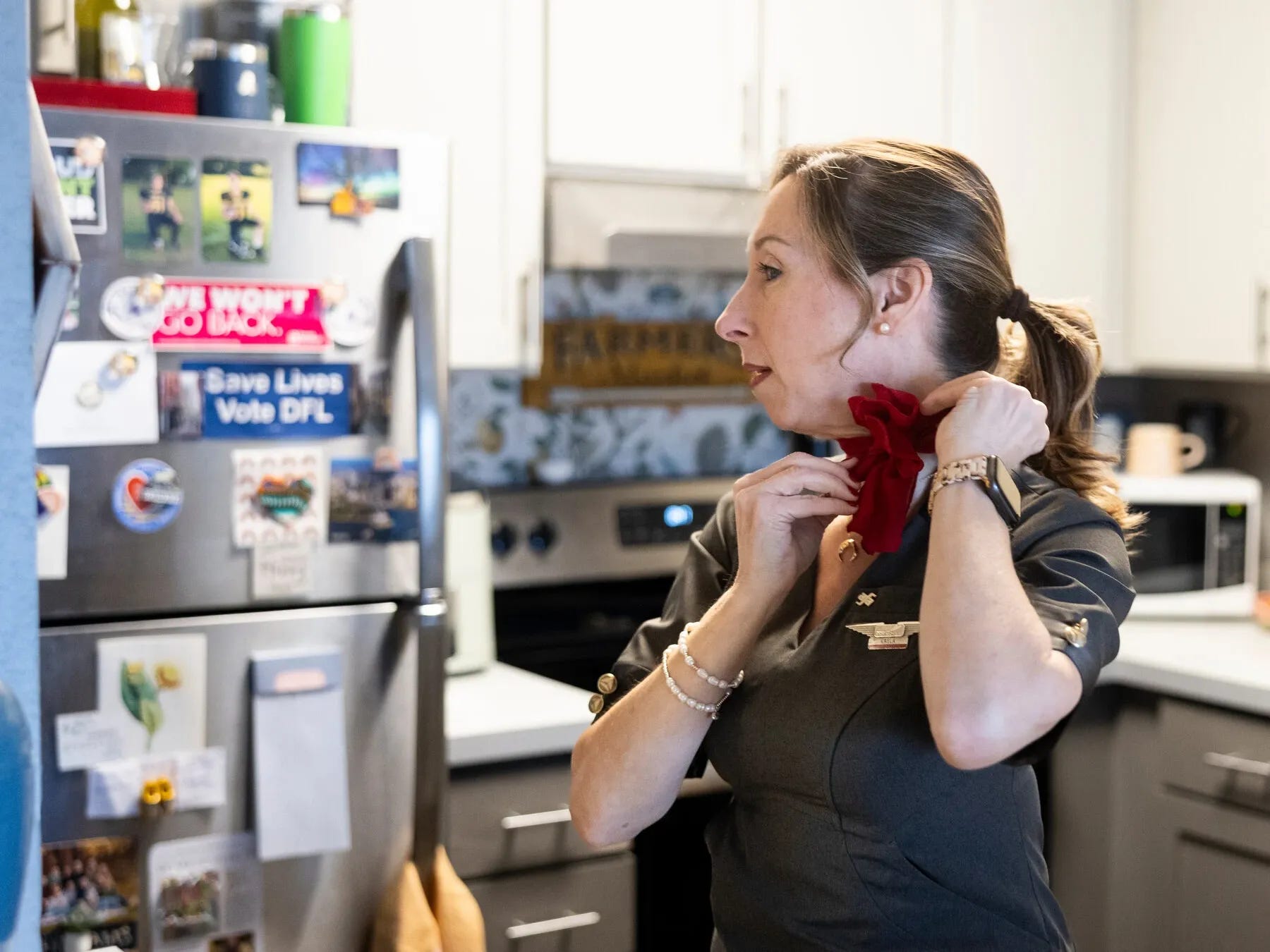
The class debate in the Democratic Party rages on. The Troy Jackson train picks up steam. Bob Brooks picks up endorsements. And a new poll has Kaela Berg neck-and-neck with her potential Republican opponent.
But first: announcing two new CWCP reports.
Below you’ll find a range of news and views that concern working-class politics today. Many are written by research associates and friends of the Center for Working-Class Politics.
The Left’s Coalition Crisis
Understanding the Massive Divide Between Working Class and College Educated Voters, and How to Bridge it
Jared Abbott and Joan Williams have a new report on the class divide on the Left and what might be done about it. Set for publication early next week, the analysis provides a thorough portrait of the various class-based attitude gaps that have become major obstacles for progressive politics.
CWCP: 2024 Campaign Candidates and Rhetoric Report
How Democratic congressional candidates’ messaging shifted across three election cycles, and what it meant electorally.
Our regular CWCP candidates report will also be published next week. This report analyzes the class background and political appeals of over 600 candidates who ran in the 2024 election cycle. Plus, this year’s report compares appeals over the last three major election cycles.
To get access to these reports as soon as they are published make sure to subscribe.
The Democratic Class Debate
The Platner campaign implosion seems to have reignited a debate about class on the Left.
Eric Levitz argues in Vox that an expansive “two-class model” is hopelessly out of date (was it ever accurate?). He prefers using “non-college” as a definition for the working class. Vinnie Rontondo at The New Republic agrees. Meanwhile, Noah Smith claims that class is some kind of vibe. And Matthew Yglesias argues that in America it’s futile to even try to define class.
We touched on some of these themes last week but they’re worth revisiting. For one thing, the main reason it’s important to focus on manual, blue-collar, and non-college-educated workers is because they are the majority of the country and they are moving away from their traditional political home on the Left. Anyone trying to wish away this problem with definitional jiujitsu should be ignored.
But there is a deeper case to be made here about why education plays such a big role in class debates today. The political sociologist Wolfgang Streeck explains it well here:
…the new class division can be understood as a result of divergent interests vis-à-vis globalisation: a definition of the new middle class as a group who are believed to, or actually do, profit from globalisation, who have an interest in open international markets for their human capital, and who do not want to be held responsible for satisfying the parochial demands of the losers of globalisation for material or cultural compensation. […]
The conflict between the old working class and its former allies, now feeling themselves to be cosmopolitans, is exacerbated by a particular asymmetry. In so-called post-industrial society’s economic division of labour and social class structure, it is typically the representatives of the new middle class who end up in possession, or, in any case, in control, of the means of cultural production and communication. This enables them to present and express their particular perspective as a general one—which is, of course, exactly what is meant by the production of ideology. As a result, in the ideal image of globalist politics the representation of the underclass in a democracy conceived as a system of institutions is replaced by the education of the underclass in democracy as a system of values. This reversal in the direction of political communication is additionally favoured by the fact that a large part of the new class works in the field of education, where they believe their task to be to dissuade the less learned by friendly encouragement or bad examination marks from holding erroneous opinions. The resulting culture wars, in which a newly standardised way of writing and speaking sometimes becomes a requirement for full moral citizenship, are conducted with a passion and emotion which is all the greater because the two hostile camps were previously allies, or at least thought they were.
— Wolfgang Streeck, Taking Back Control? (2024)
That’s a lot, but it offers a good summation of what is going on politically. The reason for the education cleavage is not merely because it makes latte sippers out of Dunkin’ drinkers (though that matters more than you might think), but because college education largely determines whether you will sink or swim in the era of neoliberal globalization. Non-college-educated workers have suffered immense wage suppression since the late 1990s, while college-educated workers have seen broad wage gains. Further, these outcomes are in large part tied to the destructive effects of hyper-globalization, which is why flashpoints around immigration, trade, and tariffs inspire such intense passions on both sides of the diploma divide.
Plus, as Streeck points out, the income-gap that has yawned between the degree-havers and the college-nevers has, in turn, resulted in a cultural gap between the two groups. Unfortunately, to resolve that gap ‘knowledge workers’ have—perhaps naively, perhaps unwittingly, and sometimes maliciously—taken it to be their duty to morally re-educate the plebs on what opinions they are allowed to hold on a whole host of issues.
Maine Democrat Troy Jackson has raised $1M for his Senate bid so far
Some good news from Maine for once. Troy Jackson has sewn up the primary nomination and he’s posted strong fundraising numbers:
Jackson, the presumptive Democratic nominee, raised $613,000 of that haul since Sunday following the selection of the 601 delegates who will determine Platner’s replacement this weekend. More than 90 percent of those delegates have pledged to back Jackson.
The fundraising number is a strong showing for Jackson, who only raised a bit over $1 million in his entire run for governor earlier this year. But he still has a lot of work to do to catch up to Sen. Susan Collins (R-Maine), who is sitting on an $11 million war chest.
‘Bob’s one of us:’ Dozens of labor unions back Bob Brooks’ campaign
Bob Brooks wins a slew of union endorsements:
“Bob’s one of us,” said Jim Irwin, president of the Lehigh Valley Labor Council, in an interview with The Keystone. “He’s a union member, he’s our brother, and he’s going to win. He’s going to go out to DC, and he’s going to fight for working families.”
He was also endorsed by the North Eastern Pennsylvania Building & Construction Trades Council, the Lehigh Valley Building & Construction Trades Council, and the Philadelphia Building & Construction Trades Council, representing over 60 local trade unions in Pennsylvania’s 7th Congressional District.
“There are a lot of politicians in Washington who like to talk the talk about working people. Bob is actually one.”
New poll shows Republican Eric Pratt in close race with DFL congressional candidates
Meanwhile, in Minnesota, Kaela Berg, the union flight attendant turned congressional candidate, is polling neck-and-neck with her potential Republican rival.
The poll, conducted by Harper Polling from June 18 to June 21, surveyed 415 likely general election voters in the district and had a margin of error of ±4.81 percentage points. The Pratt campaign commissioned the poll and provided it to Alpha News this week.
According to the campaign, respondents were asked about their preferences in hypothetical general election matchups between Pratt and the three leading DFL candidates.
In a general election matchup between Pratt and [Democratic-Farmer-Labor] DFL state Rep. Kaela Berg, the two were tied at 43%.
Berg has a tough road ahead she’s trailing in primary polls and, as is the case for most working-class candidates, she’s far behind her primary rivals in fundraising:
Matt Klein (DFL) — Q2 fundraising: $331k — Cash on hand: $519k
Matt Little (DFL) — Q2 fundraising: $175k — Cash on hand: $254k
Kaela Berg (DFL) — Q2 fundraising: $109k — Cash on hand: $56k
...morally educating the plebes. After 28 years as a blue collar labor activist, I returned to college, doing grad school in my 50s. The culture of class prejudice was rampant. I knew by experience the assumptions weren't true, but unfortunately I didn't then have Les Leopold's stats to back me up. Finally in the middle of one political discussion by well-meaning people, I pointed out they were expecting everyone else to accept and use their arcane vocabulary. It brought conversation to a halt.
A fledgling, start-up effort to attack the MAGA congressional bloc:
www.AmericanDemocracyForever.org